Hidden charges to avoid with Hackney Council rubbish collections
Posted on 13/10/2026
If you are trying to clear rubbish in Hackney, the headline price is only part of the story. The real headache often comes from the extras: missed-item fees, stair charges, bulky-waste add-ons, restricted-access costs, and the kind of small print that looks harmless until the bill lands. That is exactly why understanding hidden charges to avoid with Hackney Council rubbish collections matters. It helps you compare council collection options with private waste services properly, so you do not end up paying more than you expected for a job that felt straightforward at the start.
Let's be honest, waste collection can be one of those tasks you only think about when you urgently need it. A broken wardrobe is leaning in the hallway, the old sofa is taking up half the lounge, or a kitchen clear-out has turned into a pile of bin bags by the back door. In that moment, the cheapest-looking option is very tempting. This guide breaks the process down in plain English, shows you where extra charges can creep in, and gives you a practical way to avoid them without second-guessing every line on a quote.
You will also find a clear comparison of common cost traps, a step-by-step way to check a collection quote, and a realistic checklist you can use before you book. No fluff. Just the stuff that saves money and stress.
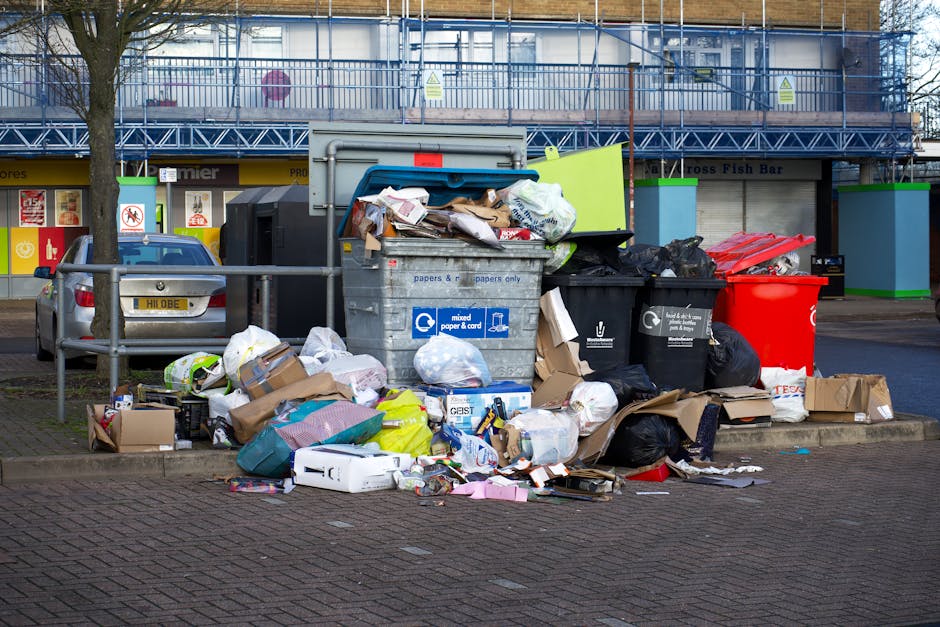
Why Hidden charges to avoid with Hackney Council rubbish collections Matters
Hidden charges are frustrating anywhere, but in a busy London borough like Hackney they can become surprisingly easy to miss. A collection that starts as a simple disposal job can be affected by access, item type, timing, lifting, or whether the waste is classed as general rubbish, bulky waste, or something with different handling requirements. If you do not ask the right questions up front, the final cost may look nothing like the first quote.
The important thing is not just the price itself. It is the predictability. When you are comparing a council service with a private collection, you want to know what is included, what is optional, and what triggers a surcharge. That clarity matters whether you are clearing one armchair or an entire flat after a tenancy change. And yes, the difference between "included" and "extra" can be annoyingly small in the wording.
There is also a trust factor. If a provider is vague about how charges work, that is usually a sign to slow down. A clear quote, with itemised service details and sensible assumptions, is much easier to work with than a low headline number that balloons later. In our experience, the best savings often come from understanding the structure of the fee, not just hunting for the lowest number.
Quick takeaway: the safest way to avoid hidden charges is to confirm exactly what the collection covers, how access is assessed, and which items may trigger extra fees before you book.
How Hidden charges to avoid with Hackney Council rubbish collections Works
Rubbish collection pricing usually works in layers. There is often a base cost for the collection itself, then one or more variables that can move the price up or down. The problem is that people tend to focus on the base cost only. That is like buying a meal and forgetting the drinks, sides, service charge, and the pudding you somehow definitely needed.
For council-related or council-adjacent waste collection, the usual cost drivers are fairly predictable, even if the wording varies. These often include the volume or weight of the rubbish, the type of waste, the number of collectors needed, any special handling, and the access conditions at the property. A basement flat with narrow stairs and no parking nearby may take more time and labour than a ground-floor pickup outside a front door. Fair enough, really. But if that difference is not explained clearly, it feels like a hidden charge instead of an operational reality.
Private waste removal services can also add charges for:
- extra labour if items are heavy or awkward
- furniture dismantling
- restricted access or long carry distances
- parking or waiting complications
- same-day or short-notice collection windows
- separate treatment for appliances, mattresses, or mixed waste
What you are really trying to do is separate genuine service costs from avoidable surprises. That means reading the quote carefully and asking, "What would make this price change?" It sounds basic, but it saves a lot of grief.
If you are exploring broader local removal options, it can help to look at a provider's overall service range too. A page such as services overview is useful when you want to understand whether a company handles general rubbish, bulky items, or more specialist clearances in one place.
Key Benefits and Practical Advantages
Checking for hidden charges is not just about avoiding overpayment. It also helps you plan better, compare providers fairly, and make quicker decisions when you are under pressure. That matters when your flat is half-packed, the landlord wants the space cleared, or builders have left a trail of rubble and packaging behind them.
Here are the practical advantages:
- Clear budgeting: you know the likely total before the job starts.
- Fewer disputes: itemised quotes reduce awkward conversations after collection.
- Faster decisions: when costs are explained well, comparing options becomes easier.
- Better service matching: you can choose the right option for furniture, garden waste, or mixed rubbish.
- Less stress on the day: everyone knows what is being removed and what it should cost.
There is another subtle benefit: better waste planning. Once you understand what drives price, you begin sorting waste more intelligently. That often means fewer unnecessary collections and fewer items being treated as premium disposal because they were mixed in with everything else. Small thing, but it adds up.
For people who care about recycling or responsible disposal, understanding the service details also helps you pick a provider with stronger environmental practices. If that matters to you, it is worth reviewing a company's recycling and sustainability information before booking. Not every collection service approaches waste the same way, and to be fair, that can make a real difference.
Who This Is For and When It Makes Sense
This guide is useful if you live in a flat, house, shared property, or managed building and need rubbish cleared without nasty surprises. It is also relevant if you are comparing council collection arrangements with a private operator and want to know where the fine print can bite.
You will probably find this especially useful if you are:
- moving out and need a quick clearance
- dealing with bulky furniture or white goods
- clearing garden waste after a tidy-up
- sorting builders' debris after small renovation work
- handling a probate, house clearance, or loft declutter
- simply trying not to pay over the odds for a one-off collection
It also makes sense if you are in a rush. Same-day or next-day jobs are convenient, but they are exactly where hidden extras can creep in. A provider might quote a low starting price, then add charges for access issues, queue time, or waste that turns out to be heavier or more mixed than described. Truth be told, the speed premium is not always obvious until you ask.
If your job is specific rather than general, use a matching service instead of forcing the waste into a broad category. For example, furniture, appliances, office waste, and building materials tend to be priced differently for good reason. A targeted service page like furniture disposal or builders' waste disposal can be a better fit than a generic collection if your load is clearly one type of material.
Step-by-Step Guidance
If you want to avoid hidden charges, do not start by asking only "How much is it?" Start by defining exactly what needs collecting. That alone cuts out a surprising amount of confusion.
- List everything that needs removing. Be specific. A sofa, two mattresses, five black bags, broken shelves, and a microwave are not the same as "some rubbish".
- Separate waste into rough categories. Furniture, garden waste, white goods, builders' waste, and household rubbish may be priced differently.
- Check access details. Think stairs, lifts, parking, long walkways, locked gates, or narrow entrances. These details matter more than people expect.
- Ask what is included in the quote. Labour, loading, disposal, recycling, VAT if relevant, and waiting time should all be clear.
- Ask what could change the price. This is the big one. If the team arrives and the load is bigger or harder to move than described, what happens?
- Confirm collection timing. Same-day, evening, and weekend slots can be priced differently.
- Ask for itemised confirmation. Even a short written breakdown is better than a vague verbal estimate.
- Prepare the waste before collection. Keep it accessible and separate items you want to keep. Saves time, and saves hassle.
A small real-world example: someone clearing a one-bedroom flat might think they have "just a bit of rubbish". Then the crew arrives and finds a wardrobe with no flat-pack joints, a mattress that needs two people to move, and a pile of mixed rubbish in a rear garden with no direct access. Suddenly the quote changes. Not because anyone is being awkward, but because the job was under-described from the start.
That is why the best question is often not "What is the cheapest collection?" but "What would this collection cost if the load was exactly as I described?" That phrasing tends to flush out hidden assumptions pretty quickly.
Expert Tips for Better Results
After plenty of waste jobs, a pattern becomes obvious: the people who pay less overall are usually the ones who prepare better. Not obsessively. Just enough to avoid surprises.
Here are the tips that genuinely help:
- Take photos of the waste before booking. It gives the provider a better sense of size and type.
- Measure bulky items. A sofa, bed frame, or appliance can look smaller in a hallway than it really is.
- Be honest about mixed loads. Mixed waste can cost more because it takes longer to sort and dispose of properly.
- Check whether dismantling is included. If not, ask whether it is available as an extra.
- Look at the access route, not just the front door. A short outdoor walk can still be awkward if parking is poor or the lift is out.
- Keep fragile or valuable items away from the clearance area. Less risk, less chaos, fewer accidental "where did that go?" moments.
One small tip that people often overlook: ask whether a quote assumes your waste is already sorted and placed in a single accessible spot. If it does, then leaving items spread across different rooms can affect the price. It sounds minor, but in practice it often matters.
And yes, if a provider cannot explain the extra charges in plain language, that is a clue in itself. You do not need a lecture. You need clarity.

Common Mistakes to Avoid
Most expensive mistakes are boringly avoidable. That is the annoying bit. They happen because people are rushed, not because they are careless.
Common mistakes include:
- Not asking about access fees: stairs, distance, or limited parking can add costs.
- Assuming all waste is treated the same: furniture, appliances, and builders' waste often sit in different pricing bands.
- Forgetting about minimum load charges: some providers have a floor price even for small jobs.
- Leaving the description too vague: "a few things" is not enough detail.
- Ignoring collection timing: urgent jobs may cost more.
- Not checking disposal responsibility: you want confidence that the waste is handled properly, not dumped elsewhere.
There is also a psychological trap here. A cheap initial quote can make you stop asking questions. We all do it. But if the provider has only priced for ideal conditions, the final bill can feel like a jump scare. Not fun. Not clever either.
Another mistake is to compare quotes without comparing assumptions. One company may include labour and disposal, while another may quote only for collection from kerbside or ground-floor access. Same headline number, completely different job. That is where people get caught out.
Tools, Resources and Recommendations
You do not need fancy software to avoid hidden charges. A phone camera, a notepad, and a few sensible questions will do most of the work. Still, a simple process helps.
Useful tools and resources for your own planning include:
- Photos and short videos: ideal for showing the volume and type of waste.
- Room-by-room checklist: useful if the clearance spans several areas.
- Measurements of large items: especially for sofas, wardrobes, beds, and appliances.
- Access notes: floor level, lift access, parking restrictions, gate codes, or narrow alleyways.
- Service information pages: helpful for checking what the provider actually handles.
If you are weighing up whether a private collection is the better route, an overview such as rubbish collection in Shoreditch can help you understand the sort of service scope you should expect, while waste removal explains broader clearance options for larger or mixed loads.
For larger household jobs, you may also want to compare dedicated services like house clearance and loft clearance, especially if the waste has been accumulating for a while and is no longer a simple one-van collection.
Law, Compliance, Standards, and Best Practice
Waste collection is not just a price issue. There are compliance and duty-of-care considerations too. In the UK, waste should be transferred to a legitimate carrier and disposed of responsibly. That is why checking a company's credentials matters, even for a seemingly small job. If you are paying someone to take rubbish away, you want to know it is being handled properly. Common sense, really, but still worth saying out loud.
Best practice usually includes:
- clear identification of what is being removed
- honest description of waste type and quantity
- itemised pricing where possible
- safe lifting and loading methods
- appropriate handling of recyclable and restricted items
- transparent terms about additional charges
It is also sensible to look for public-facing information on insurance, security, and compliance. A provider with clear pages such as waste carrier licence and compliance, insurance and safety, and terms and conditions is usually making it easier for you to check the basics before you commit.
Where prices or procedures are involved, the smartest approach is caution rather than assumption. If a collection seems unusually cheap, ask what is excluded. If a quote feels unusually complicated, ask for a plain-English version. That is not being difficult. That is being sensible.
Options, Methods, or Comparison Table
When you are trying to avoid hidden charges, the real choice is usually between different collection methods rather than just different providers. The table below gives a practical comparison of common approaches.
| Option | Best for | Common hidden charge risks | What to check first |
|---|---|---|---|
| Council-style collection | Scheduled bulky items or standard household waste | Missed-item limits, booking conditions, item restrictions | Eligible items, booking window, collection rules |
| Private rubbish collection | Fast, flexible, one-off clearances | Access fees, labour extras, mixed-load surcharges | What is included, what triggers extra cost, disposal method |
| Specialist item removal | Furniture, appliances, builders' waste, or garden clear-ups | Special handling, dismantling, heavy-item charges | Item type, weight, dismantling needs, access route |
| Full clearance service | Houses, lofts, offices, or larger mixed jobs | Room-by-room complexity, sorting time, disposal variation | Scope of work, item categories, labour included |
The practical rule is simple: the more unusual or bulky the load, the more important it is to confirm the detail before booking. A single mattress is one thing. A flat full of mixed furniture, bags, and a broken freezer is another. Different problem, different price logic.
Case Study or Real-World Example
A fairly typical case goes like this. Someone in Hackney needs a mixed load removed after a flat tidy-up: an old sofa, a chest of drawers, a few black bags, and a bulky broken appliance. The first instinct is to search for the lowest price and book quickly. Sensible enough at first glance.
But when the team asks for more detail, the picture changes. The property is on an upper floor, the lift is unreliable, the parking outside is limited, and the appliance is heavier than expected. Suddenly there is room for additional charges, not because anyone is trying it on, but because the job is more involved than the original description suggested.
Now compare that with a better-prepared approach. The customer sends photos, mentions the floor level, confirms the access route, and lists the items clearly. The quote arrives with the likely extras already flagged, and there are no awkward surprises when the crew turns up. Same waste. Different outcome. That is the whole point.
We see this pattern a lot with mixed household clearances. The people who get the smoothest outcome are usually not the ones with the biggest budget. They are the ones who describe the job properly from the start.
Practical Checklist
Use this checklist before you book any collection. It is simple, but it catches a lot.
- Have I listed every item that needs removing?
- Do I know whether the waste is mixed, bulky, recyclable, or specialist?
- Have I explained access clearly: stairs, lifts, parking, distance, and floor level?
- Have I asked what the quote includes and excludes?
- Do I know whether dismantling or heavy lifting costs extra?
- Have I checked for minimum charges, waiting fees, or urgent booking premiums?
- Have I asked what happens if the waste volume is larger than expected?
- Do I have written confirmation of the agreed price or pricing basis?
- Have I checked the provider's compliance, insurance, and terms?
- Is the waste ready and accessible on the day of collection?
If you can tick most of those off, you are in a much stronger position. Not perfect, perhaps, but far better than hoping the bill makes sense later.
Get a free quote today and see how much you can save.
Conclusion
Avoiding hidden charges with Hackney Council rubbish collections is really about doing the boring bits well: describing the waste properly, checking access, asking what is included, and refusing to assume the headline price tells the whole story. Once you know where the common extras sit, the whole process becomes calmer and more predictable.
That matters whether you are clearing a single item or a full property. Clear quotes save time, reduce arguments, and make it much easier to compare council-related options with private collection services on a fair basis. And if you are in the middle of a move, a renovation, or a sudden clear-out, that peace of mind is worth a lot. Sometimes more than you realise at the time.
Take your time, ask the awkward question, and trust the quote that explains itself properly. That small bit of care can save a surprisingly big headache.
And honestly, that is a pretty good deal.